


The Vintage Style Archive • British Fashion History
The Ultimate 1960s Mod Fashion Guide: Carnaby Street Style Reimagined
Step into the kinetic, rule-breaking world of Swinging London. Discover how sharp geometric tailoring, daring hemlines, and vibrant colour palettes created an enduring revolution—and how to curate authentic retro Mod pieces for your contemporary wardrobe today.
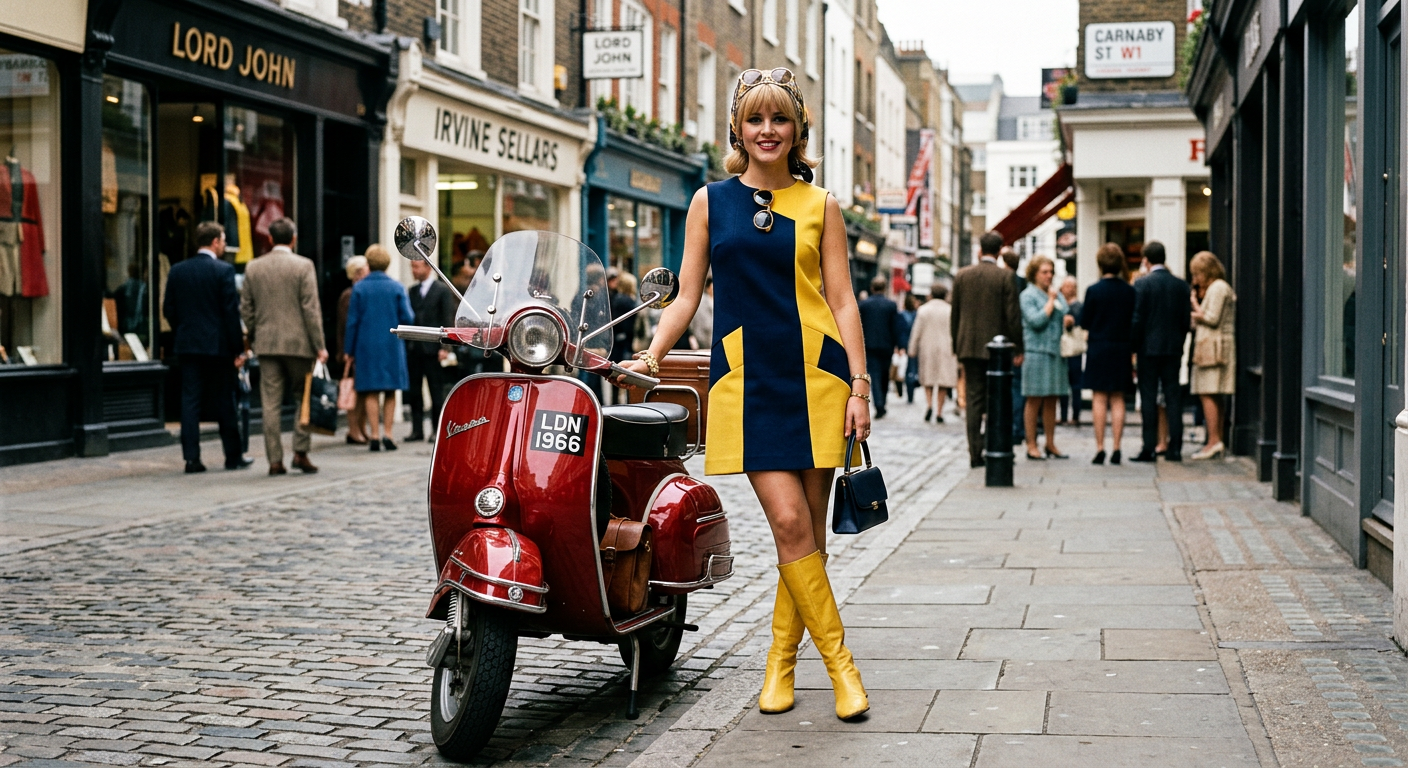
The Birth of the Youthquake: What Was 1960s Mod Fashion?
In the quiet, austere streets of post-war Britain, a sartorial rebellion was simmering beneath the surface. By the late 1950s, a new generation of working-class teenagers had emerged with disposable income, an insatiable hunger for modern jazz, and a resolute refusal to dress like their parents. They christened themselves the "Modernists"—eventually shortened to simply "Mods." What began as an underground subculture devoted to pristine continental tailoring and sleek Italian motor scooters soon erupted into a global phenomenon known as the Youthquake.
For young women in mid-century Britain, the transformation was nothing short of miraculous. The 1950s had enforced a silhouette dictated by Christian Dior's "New Look": tightly cinched waists, structured girdles, heavy petticoats, and domestic traditionalism. The Mod girl dismantled that confining scaffolding in one fell swoop. In its place, she demanded lightness, momentum, and autonomy.
Mod fashion was never merely about novelty; it was an artistic philosophy grounded in clean lines, architectural minimalism, and an optimistic gaze toward the future. Centred around London’s vibrant shopping corridors—most famously Carnaby Street in Soho and the King’s Road in Chelsea—this youth-led movement turned Britain into the absolute epicentre of the global cultural map.
To understand the lasting impact of this period, one must examine how quickly the visual grammar of fashion shifted between 1963 and 1967. Out went the fragile lace, the dusty floral prints, and the boned undergarments. In came stark geometric cuts, high-contrast monochrome patterns, industrial zippers, and unyielding wool crepes that permitted spontaneous movement, dancing all night at the Marquee Club, and climbing onto the back of a chrome-laden Lambretta without a second thought.
Iconic Designers Who Defined the Era: Quant to Courrèges
The transition from bespoke street-corner youth subculture to high-fashion juggernaut was forged by a vanguard of radical designers who understood that clothing should reflect the rapid modernisation of society.
Mary Quant: The Mother of the Mini
No discussion of British 1960s fashion is complete without Dame Mary Quant. Opening her legendary boutique, Bazaar, on the King’s Road in 1955, Quant listened directly to the stylish girls walking London’s pavements. She famously observed that it was not she who invented the mini skirt, but the girls on the street who demanded: "Shorter, Mary, shorter!"
Quant liberated the female wardrobe. She replaced stifling nylon stockings and garter belts with opaque tights in candy colours—mustard, plum, tangerine, and optical white. She introduced jersey shifts that slipped effortlessly over the head, playful pinafores, and wet-look PVC mackintoshes that turned functional rainwear into high-impact pop art. Her daisy logo remains the universal insignia of mid-sixties optimism.
André Courrèges: The Space Age Visionary
Across the English Channel, Parisian couturier André Courrèges approached fashion with an engineer’s eye. Trained as a civil engineer before entering haute couture, Courrèges launched his seminal "Space Age" collection in 1964, stripping away decorative flounces in favour of ultra-clean, architectural lines.
Courrèges introduced the world to pristine all-white ensembles, slashed trapeze dresses, open-toed flat boots, and astronaut-inspired headwear. His designs celebrated structural integrity, utilising double-faced wool, vinyl, and gabardine to create garments that stood away from the body rather than clinging to it. He demonstrated that Mod could be elevated to the highest echelon of architectural elegance.
Pierre Cardin and Rudi Gernreich
Complementing Quant and Courrèges were international visionaries like Pierre Cardin, whose circular cut-outs and futuristic satellite dresses redefined feminine proportions, and Rudi Gernreich, who championed unisex silhouettes and experimental knitwear. Together, these designers transformed the garment industry from an exclusive salon craft into an energetic, prêt-à-porter dialogue with contemporary youth culture.
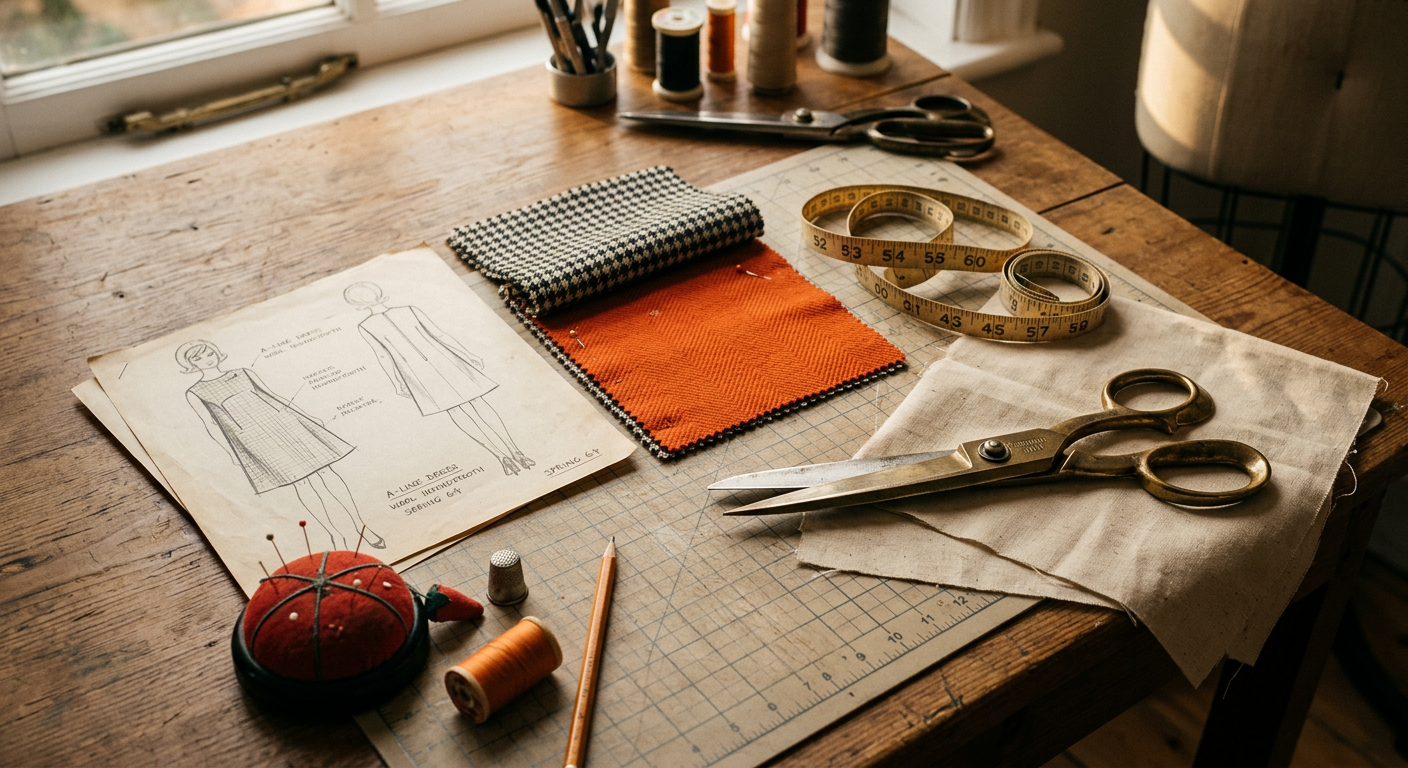
Essential Silhouette: The Architectural A-Line Shift Dress
If you were to distill the entire 1960s Mod fashion universe into a single garment, it would unequivocally be the A-line shift dress. Deceptively simple in its construction, the shift dress represented a radical departure from centuries of tailoring designed to exaggerate the hourglass figure.
Unlike the corseted waists and voluminous circles of the 1950s pin-up era, the Mod shift hung suspended straight from the shoulders. It widened incrementally toward the hem in a clean triangular shape, skimming gracefully over the bust, waist, and hips. This architectural trajectory granted the wearer complete physical liberty—she could run for a red double-decker bus, dance the Twist, or sit comfortably in an office chair without feeling restricted by bones, stays, or tight waistbands.
"The mini skirt wasn't just a piece of fabric; it was an declaration of bodily freedom. It proclaimed that women were dressing for their own dynamic lives, their own speed, and their own future."
The technical elegance of the shift lies in its dart placement. Subtle bust darts or high-set French darts provide just enough internal architecture to allow the fabric to fall smoothly without buckling, while boatneck, jewel, or high mandarin collars balance the truncated hemline. Hemlines typically hovered anywhere from three inches above the knee to mid-thigh, a length that astonished the establishment while captivating the youth of the world.
Anatomy of a Quintessential 1960s Shift
- Structured Fabric Body: Non-stretch materials like bonded wool, double-knit pique, or heavy cotton twill that hold an A-line shape independently.
- Clean Neckline Finishes: Sculpted jewel collars, Peter Pan contrasts, or sleek funnel necks.
- Graphic Hemline: Straight-edged, meticulously finished hems hitting between mid-thigh and two inches above the knee.
- Functional Hardware: Prominent contrast front zips, oversized tortoiseshell buttons, or oversized patch pockets set low on the hips.
Discover Authentic 1960s Silhouettes
Looking to capture that iconic Carnaby Street charm? Explore Louise Vintage’s curated collection of tailored shift dresses, colour-block mini dresses, and vintage-inspired retro pieces.
Découvrir la collectionHow to Choose the Perfect Mod Mini Dress for Modern Wear
Integrating an authentic 1960s Mod aesthetic into a modern wardrobe requires thoughtful attention to fabric density and proportion. Vintage originals were designed around the undergarments of their day, but contemporary retro adaptations must feel comfortable, wearable, and effortlessly chic in today's urban settings.
When selecting a Mod dress today, avoid flimsy synthetic knits that drape like modern t-shirts. The true Mod silhouette relies on structure. Seek out garments crafted from substantial wool blends, heavy cotton drill, milano rib knits, or stiff linen blends that maintain their crisp triangular profile when you move.
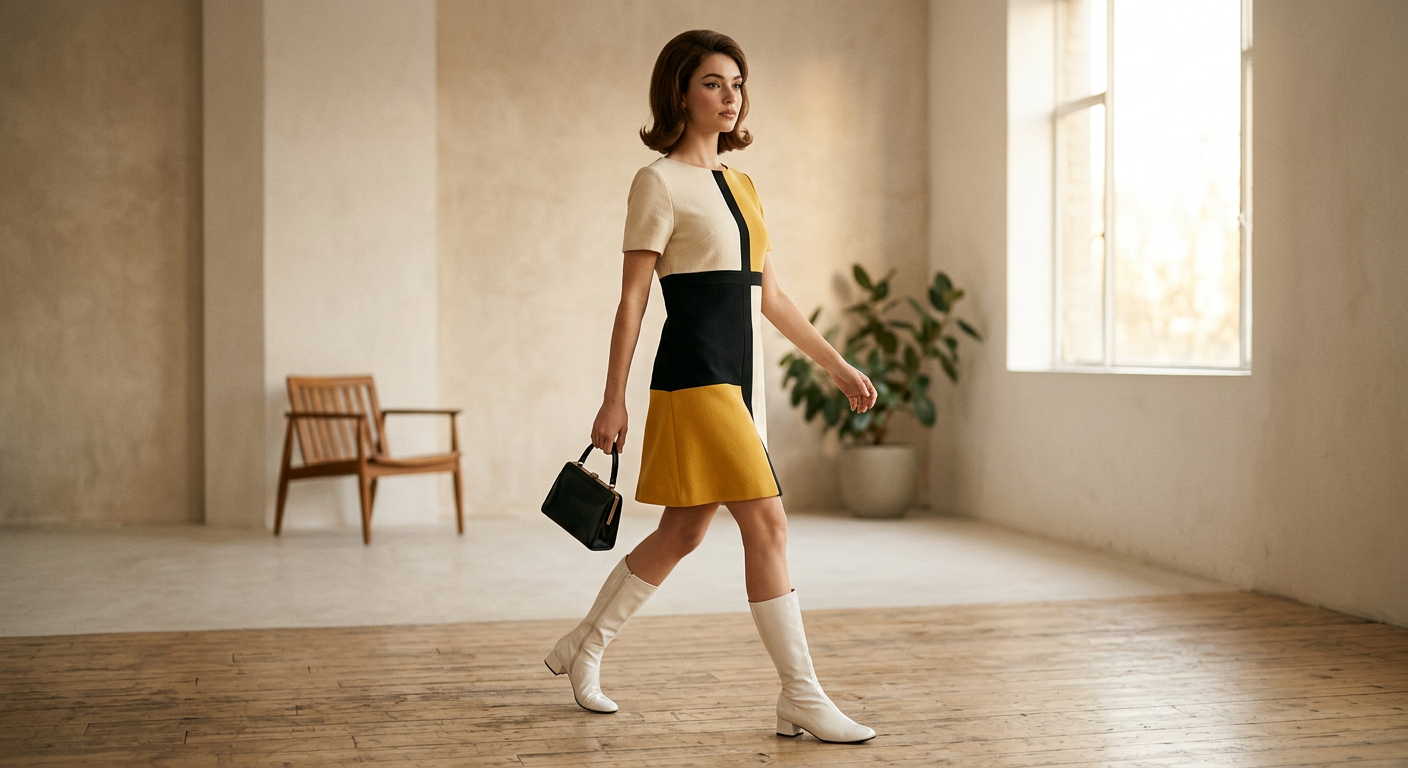
Key Proportions for Modern Styling
- Balance the Hem with the Neckline: If your dress features a daring mini hemline, opt for a high boat neck, mandarin collar, or long sleeves to maintain the chic, sophisticated balance characteristic of high-fashion 1960s editorial spreads.
- Check the Shoulder Fit: The shoulder seam should sit squarely on your natural shoulder edge. If the shoulder is too wide, the dress loses its sharp modernist silhouette and risks looking unrefined.
- Layering Versatility: Choose a sleeveless pinafore or shift dress cut generously enough through the armholes to comfortably layer over fine-gauge merino roll-neck jumpers during autumn and winter.
- Select High-Impact Details: Look for contrasting welt pockets, bold collar piping, or graphic central plackets that celebrate the mid-century affection for functional geometry.
Bold Patterns & Palette: Colour-Blocking, Op-Art, and Monochromes
The visual landscape of 1960s fashion was an explosion of graphic intensity. Designers drew deep inspiration from the contemporary art world, translating the kinetic canvases of the Op-Art movement directly onto textiles.
British artist Bridget Riley became an unexpected muse for fashion houses across Europe. Her disorienting optical illusions, dizzying vortexes, and stark black-and-white chevron patterns were rendered onto silk jerseys, vinyl coats, and wool shift dresses. Op-Art garments created the illusion of movement even when the wearer stood perfectly still, turning fashionable women into walking pieces of kinetic modern art.
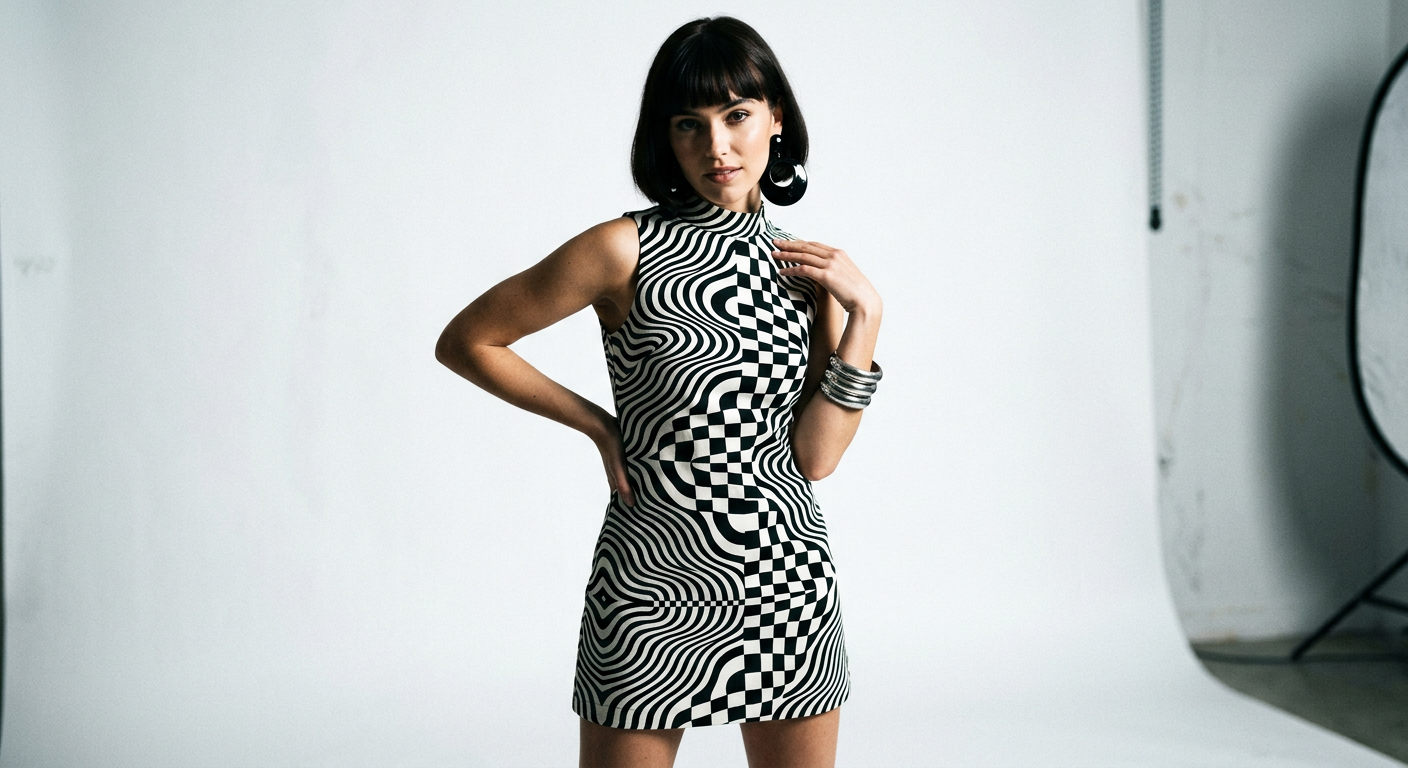
The Iconic Colour Palettes of Mod Culture
Mod aesthetics generally divided into two distinct colour camps, both equally arresting in their execution:
- The Optical Monochrome: Pure stark black, brilliant optic white, and charcoal grey, deployed in checkerboards, vertical split-stripes, oversized houndstooth checks, and contrasting borders.
- Primary Colour-Blocking: Inspired by Piet Mondrian’s neoplasticist paintings (and famously immortalised on the couture runway by Yves Saint Laurent in 1965), colour-blocking paired pure primary hues—canary yellow, cobalt blue, pillar-box red—separated by thick black boundary lines.
- Pop-Art Brights: Saturated shades of tangerine orange, bright lime green, hot bubblegum pink, and electric violet, often worn in solid monotone heads-to-toes or clashed fearlessly in wide horizontal bands.
What distinguished Mod prints from the psychedelic swirl of the late 1960s hippie counterculture was discipline. Mod patterns were geometric, crisp, and regimented: target rounds, target arrows, windowpane checks, and clean grids. They reflected the rise of television, space travel, computer punch cards, and the accelerating tempo of modern industrial life.
The Mod Accessories Checklist: Footwear, Headwear, and Statement Eyewear
In the Mod universe, accessories were not an afterthought—they were fundamental architectural components of the overall outfit. An authentic 1960s ensemble is anchored from the ground up, with shoes and headwear setting the rhythm for the entire look.
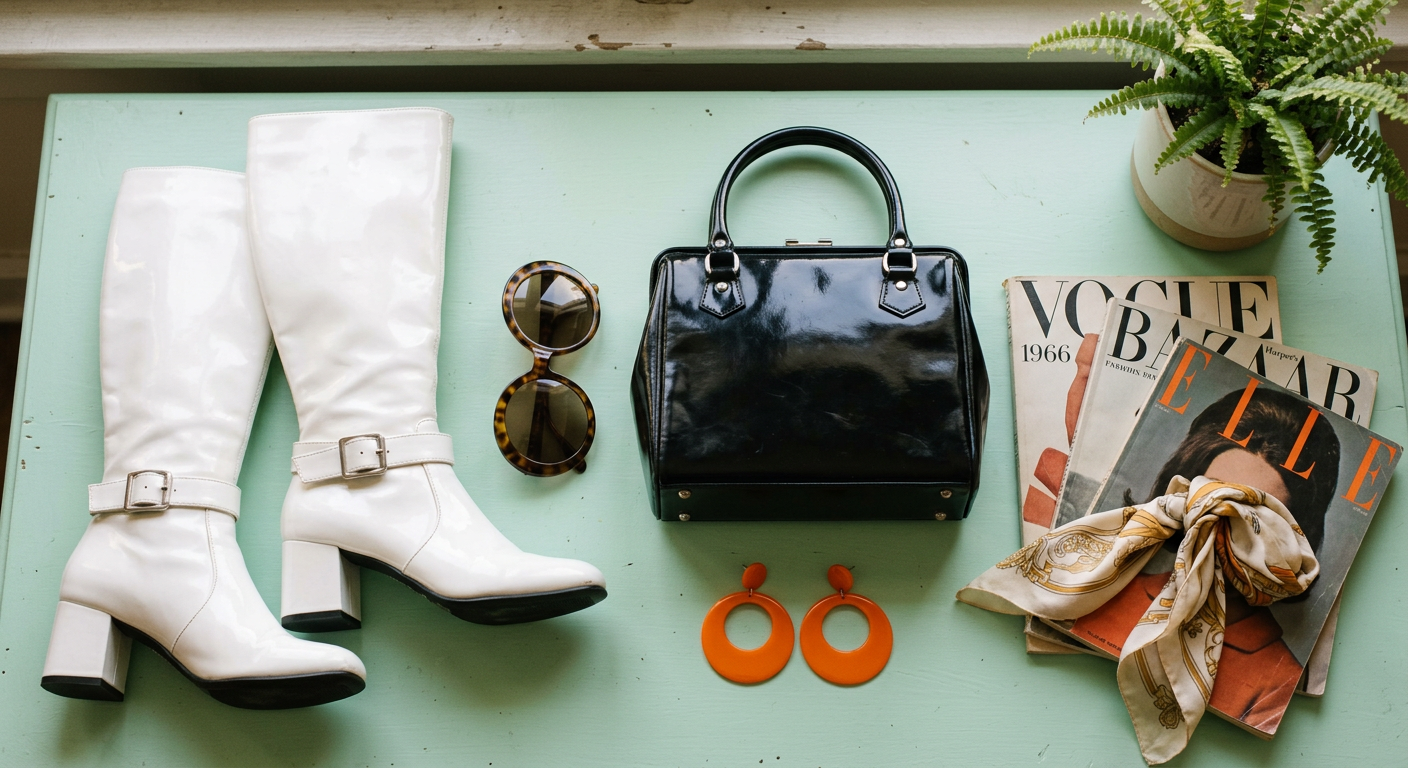
Essential Mod Footwear
Footwear during this era discarded the sky-high, spindly stiletto heels of the 1950s in pursuit of comfort, speed, and geometric stability. The most celebrated styles included:
| Shoe Style | Key Features | How to Pair It |
|---|---|---|
| The Go-Go Boot | White or primary-coloured patent vinyl, calf-height, low square block heel. | Essential partner to high-thigh A-line mini dresses and mod raincoats. |
| The Chelsea Boot | Ankle-height leather, elasticated side gusset, pull-tab, Cuban or flat heel. | Pairs seamlessly with cropped cigarette trousers, pea coats, and ribbed knits. |
| The Mod Mary Jane | Square toe, wide single or double instep straps, patent leather, low block heel. | Worn with bright opaque tights or ribbed knee-high socks for a chic schoolgirl look. |
| Slingback Pilgrim Pump | Oversized metallic buckle on the vamp, low chunky heel, square or chisel toe. | Perfect for retro office wear and sophisticated tailored daywear. |
Finishing Accents
To seal the look with authentic 1960s flair, consider adding these signature accents:
- Opaque & Patterned Tights: Coloured tights were revolutionary. Match your tights to your hemline for a striking monotone leg-lengthening effect, or use optic white cable-knit tights to offset a dark mini skirt.
- Geometric Lucite & Acrylic Jewellery: Mod girls turned away from pearls and diamonds. They favoured round disc earrings, oversized square resin pendants, and chunky plastic bangles in bright primary tones.
- Statement Eyewear: Think oversized white round acetate frames, dramatic cat-eyes with flattened brow lines, or bug-eye sunglasses reminiscent of Audrey Hepburn in How to Steal a Million.
- The Newsboy or Baker Boy Cap: Popularised by British model Jean Shrimpton, a structured corduroy, leather, or wool cap lent an insouciant, boyish charm to feminine mini dresses.
Hair & Makeup: Graphic Liners and the Sculpted Pixie Cut
The Mod look was completely unified: face, hair, and clothing existed in total harmony. The beauty regime of the mid-sixties departed radically from the soft, matronly curls and red lips of the preceding decade, embracing graphic experimentation and doll-like youthfulness.

The Iconic Cut-Crease Eye: Step-by-Step
- Prep the Base: Sweep a matte chalk-white, porcelain, or pale beige eyeshadow across the entire lid from lash line to brow bone. The contrast is essential.
- Carve the Crease: Using a sharp black liquid or gel eyeliner, trace a clean, deliberate arc along the hollow of your eye crease, directly above your natural lid. Do not blend this line out—the hallmark of Mod eye makeup is its razor-sharp definition.
- Upper Lash Wing: Draw a dense black line along your upper lash line, flicking it outwards into a modest architectural wing that mirrors the arc of your crease line.
- Twiggy Lower Lashes: Apply multiple coats of volumising black mascara to bottom lashes. For the definitive "Twiggy" gaze, use a fine liquid eyeliner brush to hand-paint delicate, spike-shaped vertical lash lines onto your lower lid.
- The Matte Pale Lip: Keep the lips understated to let the graphic eyes dominate. Choose a matte nude, peachy beige, or soft pale pink lipstick, often blended with a touch of concealer for that quintessential mod finish.
Architectural Hair: Sassoon’s Scissors
Hair styling underwent a seismic revolution under the scissors of Vidal Sassoon. Sassoon liberated women from the weekly tyranny of hair rollers, backcombing, and heavy hairspray cans. He created the Five-Point Cut and the sleek, geometric bob that fell naturally back into place after a vigorous shake. Women embraced the freedom of the sculpted pixie crop—famously worn by Twiggy and Mia Farrow—and the sleek chin-length pageboy bob with blunt, brow-skimming fringes.
Modern Mod: How to Style 1960s Ensembles for Contemporary Everyday Life
The beauty of the 1960s Mod wardrobe lies in its extraordinary versatility. Because the aesthetic is founded upon tailored simplicity and clean geometry, authentic retro pieces integrate seamlessly into a twenty-first-century wardrobe without looking like an all-out theatrical costume.
Here are four fail-safe formulas to translate Carnaby Street chic into contemporary everyday styling:
1. The Tailored Creative Office Look
Select a monochrome houndstooth or Prince of Wales check shift dress. Layer it over a tissue-weight black merino wool turtleneck jumper. Add 80-denier opaque black tights and a pair of polished leather loafers or Mary Jane pumps with a sturdy block heel. Finish with a minimal structured leather tote and delicate resin stud earrings. It is professional, razor-sharp, and quietly retro.
2. The Weekend Coffee Run
Pair high-waisted cropped cigarette trousers (hemmed precisely at the ankle bone) with a Breton striped boat-neck top. Layer an oversized camel or bottle-green pea coat on top. Complete the ensemble with black leather Chelsea boots and oversized round tortoiseshell sunglasses. The look is effortless, continental, and timelessly sophisticated.
3. The Evening Cocktail Statement
Choose an A-line colour-block mini dress in rich jewel tones—such as plum and mustard, or emerald and navy. Eschew tights in favour of sheer hosiery, and slip into sleek patent ankle boots. Add a graphic Lucite box clutch and dramatic winged eyeliner for a refined, retro cocktail hour aesthetic.
4. The Space Age Minimalist
Embrace André Courrèges’ vision by pairing an optic white trapeze mini skirt with a fine ribbed roll-neck in vibrant lemon or bright tangerine. Ground the look with contemporary white leather trainers or low block-heel ankle boots, keeping accessories restricted to clean geometric circles.
Curate Your Vintage Wardrobe with Louise Vintage
Find the missing piece in your retro collection. From authentic 1960s A-line shift dresses to timeless coats and accessories, Louise Vintage offers handcrafted retro elegance for the modern woman.
Découvrir la collectionCurating Your Mod Wardrobe with Louise Vintage
At Louise Vintage, we believe that true style transcends seasonal trend cycles. The 1960s Mod movement remains one of the most inspirational chapters in fashion history because it proved that women’s clothing can be simultaneously playful, architectural, liberating, and immaculately tailored.
Whether you are drawn to the vivacious pop-art energy of Mary Quant's King's Road or the refined, futuristic geometry of Courrèges and Cardin, our collection of retro dresses, structured outerwear, and vintage accessories is thoughtfully curated to bring the magic of the 1960s back to life.
Each piece is chosen for its structural silhouette, high-density fabrics, and enduring vintage charm. By investing in well-crafted classic cuts, you build a sustainable wardrobe that honours the brave young pioneers of Carnaby Street—women who took the scissors to conformity and stepped confidently forward into their own bright, modern future.
Frequently Asked Questions About 1960s Mod Fashion
- What are the essential staples of 1960s Mod fashion?
- Key staples include the geometric A-line shift dress, Mary Quant-inspired mini skirts, tailored boxy jackets, ribbed polo turtlenecks, patterned opaque tights, and go-go or Chelsea boots.
- How did Mod style differ from Rocker fashion in the 1960s?
- Rockers preferred tough leather motorcycle jackets, denim, and utilitarian boots centered around motorcycle culture. Mods favoured sleek, bespoke tailoring, sharp geometric shapes, Italian scooters, and clean, avant-garde Carnaby Street aesthetics.
- How can I style a 1960s Mod dress for everyday wear today?
- Pair a vintage-inspired colour-block shift dress with neutral block-heel ankle boots, minimal structural jewellery, and a sleek coat to achieve a polished retro look suitable for contemporary casual or smart-casual settings.
- Who were the most influential designers of the 1960s Mod movement?
- Mary Quant pioneered the youthquake movement by introducing the mini skirt and playful tights, while André Courrèges brought architectural Space Age minimalism and PVC elements to haute couture Mod fashion.
- What fabrics and patterns define authentic Mod clothing?
- Opt for structured, non-stretch woven fabrics such as wool crepe, heavy cotton twill, gabardine, and houndstooth jacquards that hold the architectural A-line shape characteristic of the era.
The Enduring Radiance of the 1960s Mod Spirit
Fashion in the swinging sixties was never merely about hemlines creeping above the knee or the sudden explosion of bold pop-art palettes; it was a profound cultural awakening, an electric declaration of youth, autonomy, and infectious optimism. To dress in the Mod tradition was to participate in an everyday artistic revolution, transforming the grey pavements of post-war Britain into dynamic, living runways. When you slip into a tailored A-line shift dress or button up a sculptural double-breasted trench coat today, you are not simply wearing vintage apparel—you are channelling an unshakeable poise, an unapologetic hunger for modernity, and a celebration of razor-sharp individuality.
At Louise Vintage, our enduring passion lies in reviving this transformative sartorial energy for the modern British wardrobe. We carefully curate standout silhouettes that honour the architectural brilliance, luxurious heavyweight textures, and meticulous craftsmanship of the golden Carnaby Street era. Each piece in our collection tells a vibrant story of liberation and self-expression, inviting you to rediscover personal styling as an adventurous, joyful art form. Whether you are stepping out for a sophisticated evening gathering in an eye-catching monochrome colour-block tunic or curating an effortless weekend aesthetic with sleek knitwear and Chelsea boots, let your attire reflect the timeless audacity and immaculate polish of the Sixties youthquake.
Embrace Timeless Sixties Elegance
Discover our handpicked selection of iconic shift dresses, tailored outerwear, and authentic retro accessories crafted to bring mid-century confidence into your everyday rotation.
Explore the Louise Vintage Mod Collection